Would you like to switch to the accessible version of this site?

Go to accessible site Close modal window

Don't need the accessible version of this site?

Hide the accessibility button Close modal window
Accessibility View Close toolbar

605 West 5th Street

Morris, MN 56267 US

320-589-4033

Morris Veterinary Center PSC
Menu
  • Home
  • About Us
    • Clinic Information
    • Meet Our Staff
    • Clinic Tour
  • Companion Animal
    • Wellness Care
      • Canine Vaccinations
      • Feline Vaccinations
      • Heartworm Disease
      • Feline Leukemia Virus
      • Internal Parasites
      • External Parasites
    • Surgery
      • Laser
      • Spay
      • Neuter
      • Orthopedics & Soft Tissue
    • Dental Care
    • Diagnostics
      • Laboratory
      • Urinalysis - Fecal Analysis
      • Bacteriology - Cytology
      • Thyroid - Cortisol Testing
      • FeLV/FIV Testing
      • Snap 4DX
      • Chemistry & CBC Profiles
      • Imaging
      • Radiography
      • Ultrasound
    • Grooming
    • Pet Nutrition
      • Hill's Pet Nutrition
      • Canine Nutrition
      • Feline Nutrition
      • Homemade Treats
    • Behavior Issues
      • Biting
      • Puppy Socialization
      • Elimination Behaviors in Cats
      • Submissive Urination in Dogs
    • Helpful Info
      • Aging Your Pet
      • Breeding Your Dog
      • Skunk Odor
      • Summer Pet Care
      • Pet First Aid
      • Obesity in Pets
  • Livestock
    • Mobile Units
    • Bovine
      • Vaccinations
      • Implants
      • Bovine Parasites
      • Reproductive Performance
    • Swine
      • Swine Vaccinations
      • Swine Parasites
      • Production Phases
      • Production Systems
    • Sheep
      • Sheep Vaccinations
      • Sheep Parasites
      • Sheep Breeding and Production
      • Scrapie
    • Diagnostics
      • Laboratory
      • Reference Laboratories
      • Livestock Urinalysis and Fecal Analysis
      • Livestock Bacteriology & Cytology
      • Livestock Chemistry & CBC Profiles
      • Necropsy
      • Imaging
    • Transport Info
  • Equine
    • Vaccinations
    • Parasites
    • Castration
    • Pregnancy Exam
    • Dental Care
    • Coggins Testing
  • Links
  • Contact Us
  • Veterinary Topics
    • Pet Health
      • Chronic Conditions
      • Digestive and Oral Health
      • Diseases and Viruses
      • Pests and Parasites
      • Orthopedics
    • Today's Veterinarian
    • Choosing Your Pet
      • Finding Your Pet
      • Cats
      • Dogs
      • Exotics
        • Amphibians
        • Birds
        • Reptiles
          • Lizards
          • Turtles
      • Small Mammals
        • Ferrets
        • Rabbits
        • Domesticated Animals
          • Prairie Dogs
        • Pocket Pets
          • Chinchillas
          • Guinea Pigs
          • Hamsters
          • Hedgehogs
          • Rats
      • Livestock
        • Cows
        • Donkeys, Horses & Mules
        • Goats
        • Pigs
        • Poultry
        • Sheep
    • Living With Your Pet
      • Bringing Your Pet Home
      • Children and Pets
      • Providing Care
      • Travel
      • Saying Goodbye
    • Newsletter Library
      • Cats
      • Tips for Pet Owners
      • Behavior & Training
      • Fleas & Parasites
      • Keeping Pets Healthy
      • Recognizing Illness
      • Nutrition & Food
      • Pet Dangers
      • Seasonal Topics
      • Visiting the Vet
      • Equine
      • Newsletter Archive
        • Fun with Pets
        • Unbelievable Pets
    • Video Newsroom
      • Health Topics
      • Technology and Science
      • Other Interests
    • Newsletter Library
    • Client Survey
    • Pets4Kids
  • Home >
  • Articles >
  • Newsletter Library >
  • Recognizing Illness >
  • Acupuncture as Pain Management for Pets

Acupuncture as Pain Management for Pets

  • Created in Newsletter Library, Recognizing Illness
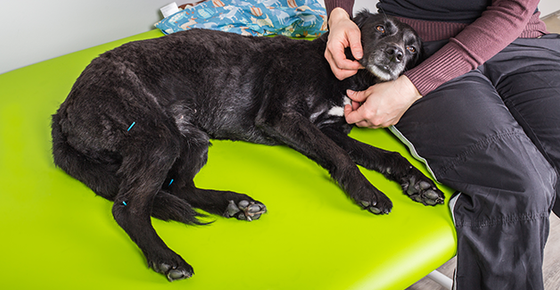
Image of dog getting acupuncture.

If your pet is suffering from pain or another illness but not responding to traditional veterinary care, veterinary acupuncture may be an effective treatment option. Veterinary acupuncture is very similar to the type of acupuncture used to treat humans. Long, thin needles are inserted at specific pressure points along an animal’s body to alleviate pain and stimulate the central nervous system. Typically, only a certified veterinary acupuncturist may administer acupuncture treatments for animals.

Veterinary acupuncture has its roots in traditional Eastern medicine. According to Chinese philosophy, the “chi” (a body’s energy) travels through energy pathways, known as meridians. A blockage or obstruction in these pathways affects the chi’s ability to travel through the body. Contemporary medicine recognizes that the concept of the “chi” is very similar to our understanding of the central nervous system. Stimulating different points along the central nervous system stimulates the release of chemicals in the muscles, brain, and spinal cord. These chemicals affect the brain’s perception of pain and stimulate the release of other chemical mediators to improve organ function.

Studies suggest that veterinary acupuncture may be beneficial for a variety of animal species, including dogs, cats and horses. In fact, Chinese and Korean farmers have treated horses and cattle with acupuncture for centuries. In recent years, the applications for veterinary acupuncture have expanded to include zoo animals, small mammals, and pet birds.

Veterinary acupuncture treatments are generally well tolerated by pets as these treatments are gentle and safe. In fact, some pets even fall asleep during treatment because they enter such a peaceful, relaxed state! Treatment sessions typically last between 15 and 20 minutes; a series of five to 10 sessions may be necessary to address a pet’s health condition.

When a pet is suffering from pain, it can be a very frustrating experience for pet owners if they are unable to do anything directly to alleviate this pain. If a pet is not responding to conventional anti-inflammatory medication or other pain medications, then acupuncture may be able to help.

In addition to pain management, veterinary acupuncture is also beneficial for treating the following conditions: (1) disorders of the musculoskeletal system such as arthritis, (2) paralysis of the rear limbs, (3) seizures, (4) back pain, (5) facial nerve paralysis.

Source:

American Academy of Veterinary Acupuncture. “What Is Animal Acupuncture?”

  • Pet Health
    • Chronic Conditions
    • Digestive and Oral Health
    • Diseases and Viruses
    • Pests and Parasites
    • Orthopedics
  • Today's Veterinarian
  • Choosing Your Pet
    • Finding Your Pet
    • Cats
    • Dogs
    • Exotics
      • Amphibians
      • Birds
      • Reptiles
        • Lizards
        • Turtles
    • Small Mammals
      • Ferrets
      • Rabbits
      • Domesticated Animals
        • Prairie Dogs
      • Pocket Pets
        • Chinchillas
        • Guinea Pigs
        • Hamsters
        • Hedgehogs
        • Rats
    • Livestock
      • Cows
      • Donkeys, Horses & Mules
      • Goats
      • Pigs
      • Poultry
      • Sheep
  • Living With Your Pet
    • Bringing Your Pet Home
    • Children and Pets
    • Providing Care
    • Travel
    • Saying Goodbye
  • Newsletter Library
    • Cats
    • Tips for Pet Owners
    • Behavior & Training
    • Fleas & Parasites
    • Keeping Pets Healthy
    • Recognizing Illness
    • Nutrition & Food
    • Pet Dangers
    • Seasonal Topics
    • Visiting the Vet
    • Equine
    • Newsletter Archive
      • Fun with Pets
      • Unbelievable Pets
  • Video Newsroom
    • Health Topics
    • Technology and Science
    • Other Interests
  • Newsletter Library
  • Client Survey
  • Pets4Kids

Newsletter Signup

Sign up for more articles

Office Hours

Our Regular Schedule

Monday:

8:00 am

5:00 pm

Tuesday:

8:00 am

5:00 pm

Wednesday:

8:00 am

5:00 pm

Thursday:

8:00 am

5:00 pm

Friday:

8:00 am

5:00 pm

Saturday:

8:00 am

12:00 pm

Sunday:

Closed

Closed

Location

Find us on the map

  • Copyright © 2026 MH Sub I, LLC dba iMatrix.
  • Admin Log In
  • Site Map